
Does eInvoice implementation require technical clearance from your enterprise resource planning (ERP) or accounting system provider?
Not necessarily.
If an eInvoice solution works as a separate, plug-and-play layer, your business may not need to replace or extensively modify its existing finance system. An application programming interface (API) can connect and match invoice data while the eInvoice provider handles the implementation.
This approach can reduce the need for custom development and help finance teams move forward without turning eInvoice implementation into a major ERP project.
However, there is an important distinction: avoiding ERP modification does not automatically remove every contractual, cybersecurity, or internal approval requirement. Businesses should still review their existing arrangements before connecting an external solution.
Will Your ERP Provider Need to Be Involved?
Finance teams often assume their existing ERP provider must lead or approve the entire implementation because invoice information originates from the ERP or accounting system.
This concern is understandable. Traditional system integrations may require:
- Custom development
- Changes to the ERP’s source code
- New modules or software licenses
- Assistance from the ERP provider
- Lengthy testing and approval processes
- Additional implementation costs
As a result, businesses may delay eInvoice implementation while waiting for their ERP partner’s technical availability or proposal.
But not every eInvoice solution requires deep integration with the core system. A plug-and-play API can provide a more practical route by working alongside the existing ERP.
How can a plug-and-play API support eInvoice implementation?
A plug-and-play API acts as a connection layer between the company’s existing finance system and its eInvoice workflow.
Instead of rebuilding the ERP, the API can receive the available invoice data, match the relevant fields, and convert the information into the required structure. The eInvoice solution can then process and electronically issue the invoice.
How the API connects your system to eInvoicing
Sends the invoice data it already has.
- Keep your current system
- No major changes
- Less custom work
- Fills the required fields
- One format for all systems
Issues the invoice electronically.
- eInvoices issued and sent
- Easier tracking and reconciliation
Check if you’re ready for eInvoicing
Check EIS readiness →The ERP continues to perform its primary accounting and operational functions. The eInvoice solution handles the additional electronic invoicing workflow.
Does a plug-and-play connection require technical intervention?
A properly designed plug-and-play eInvoice solution can significantly reduce the technical work required from the customer’s internal team and ERP provider.
Finance teams do not need to rebuild their accounting environment or manage an extensive custom-development project.
The exact work required will depend on the company’s systems, data quality, security controls, and invoicing processes. “Plug and play” should mean a lighter and more manageable implementation, not that preparation, testing, or compliance review can be skipped.
Ensuring Each Data Field Is Matched Correctly
The existing ERP or accounting system may already contain most of the required invoice information. The practical challenge is ensuring that each data field is complete, accurate, and matched to the correct eInvoice field.
Data matching may cover:
- Seller and buyer information
- Taxpayer identification numbers
- Invoice numbers and dates and more
A plug-and-play API can simplify this process by mapping the company’s existing invoice data to the required eInvoice structure. This reduces manual work and helps maintain consistent information across the ERP, accounting records, and eInvoice workflow.
eInvoice Implementation Without an ERP Overhaul
The answer to whether eInvoice implementation requires technical clearance from an ERP provider depends on how the systems are connected.
When an eInvoice solution requires changes to the ERP, provider involvement may be necessary. When a plug-and-play API can securely use data that is already accessible, the company may be able to implement e-invoicing without extensive ERP modification or a large custom-development project.
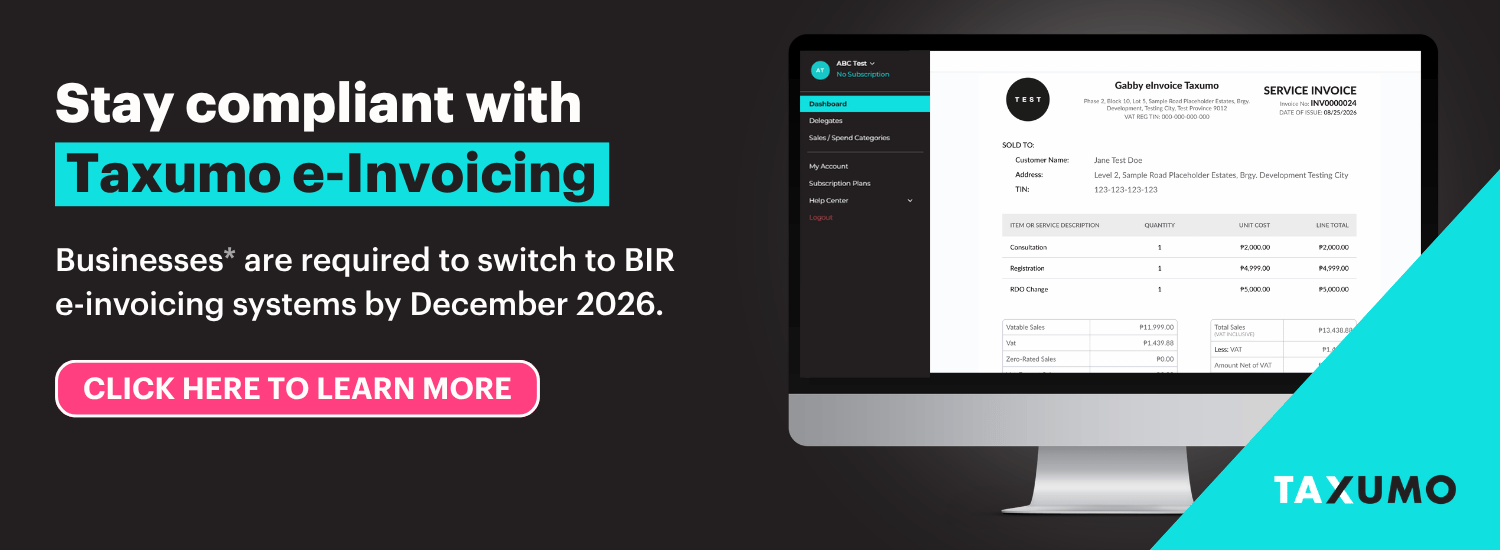
Taxumo simplifies eInvoice implementation through a plug-and-play API. Our team handles data matching and API setup so your finance team can retain its existing ERP or accounting system while adding an electronic invoicing workflow.
This article provides general information and is not tax or legal advice. Businesses should confirm their specific obligations with the BIR and their professional advisers.

Frequently asked questions
Do we need approval from our ERP provider?
Not always. If the eInvoice solution connects without changing your core ERP or accounting system, extensive support from your ERP provider may not be needed. However, check your software contract, data access, security rules, and internal approval process before connecting another system.
Do we need to replace our existing accounting system?
No. A plug-and-play API can connect your existing invoice data to an eInvoice system. Your business can keep using its current ERP or accounting software while adding an electronic invoicing process.
Will eInvoice implementation require a large IT project?
Not with a plug-and-play approach. Taxumo eInvoice handles the API connection and data matching, reducing the technical work required from your finance and IT teams. Some testing, security checks, and internal approvals may still be necessary.
What invoice data needs to be matched?
This may include customer details, tax identification numbers, invoice numbers, dates, descriptions, prices, discounts, taxes, credit note references, and branch information. Each field must be matched accurately to the correct eInvoice field.
How does a plug-and-play eInvoice API work?
The API connects your existing invoice data to the eInvoice system. It matches the required fields and prepares the information for electronic invoicing without requiring your business to rebuild its current accounting setup.